Impuls AgriTech 2026 Launches with 12 Projects Shaping the Future of Agriculture
The new cohort brings together 23 beneficiaries from across Catalonia, connecting scientific research, technological innovation, and entrepreneurial expertise to develop market-ready AgriTech and AgriFood solutions.
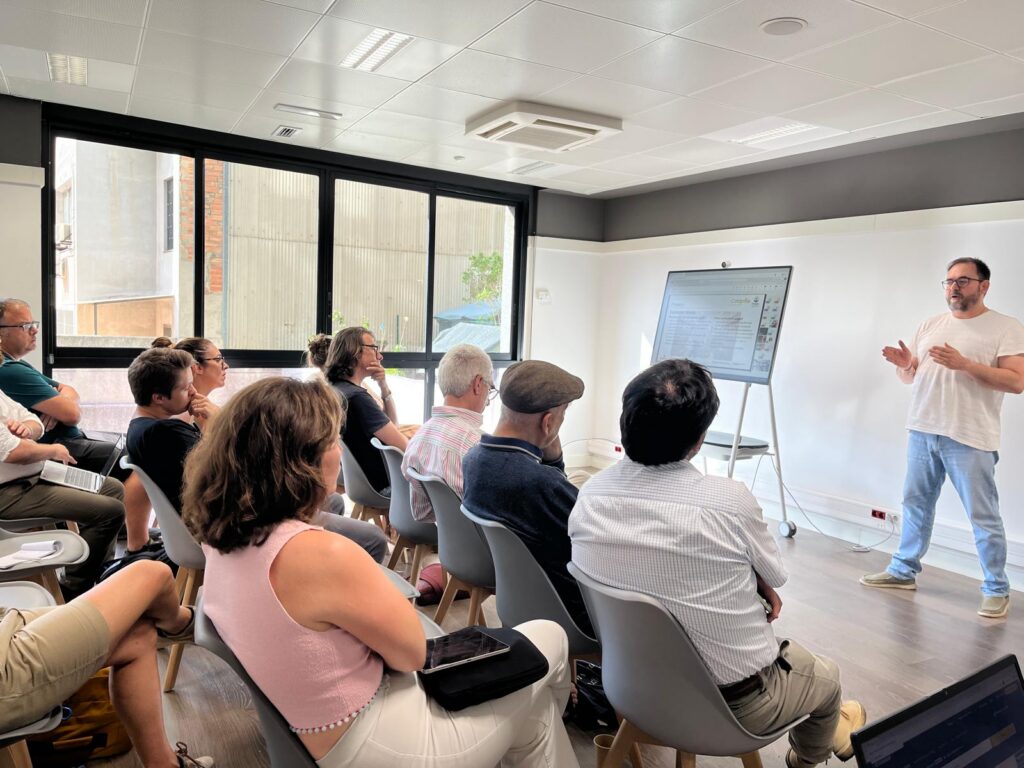
Impuls AgriTech 2026 officially began on July 14 with an Idea Pitch session that brought participating entrepreneurs and researchers together with prospective mentors for the first major event of the program.
The session was presented by GBSB Global Business School, the program’s lead organization, and the Institut de Recerca i Tecnologia Agroalimentàries (IRTA), its co-leading organization. Barcelona Activa also attended as a guest organization.
Twenty people participated in person and ten joined remotely, including business mentors, specialized AgriTech mentors, and representatives of IRTA, Xarxa AgriTech, and Barcelona Activa. The event introduced the projects selected for the 2026 edition and initiated the mentoring relationships that will support their development throughout the program.
A Diverse Cohort Rooted in Catalonia’s Innovation Ecosystem
This year’s cohort comprises 12 projects and 23 beneficiaries working across six rapidly evolving fields:
- Artificial intelligence and data for precision agriculture
- Agricultural robotics
- Biotechnology and biological inputs
- AgriFinTech
- AgriFood innovation
- Digitalization of the primary sector
The participating teams include researchers and innovators connected to leading institutions such as IRTA, the Universitat Politècnica de Catalunya, the Universitat de Lleida, and Eurecat, alongside entrepreneurs and companies developing new solutions throughout Catalonia.
Their geographic reach reflects the strength and diversity of the regional agricultural ecosystem, with projects originating from areas including Segrià, Baix Camp, Tarragonès, Lleida, Vallès Oriental, Vallès Occidental, Terra Alta, and Barcelona.
Meet the 12 Impuls AgriTech 2026 Projects
The projects selected for the 2026 program demonstrate how technologies including artificial intelligence, robotics, biotechnology, blockchain, satellite monitoring, and advanced food processing can address real challenges within agriculture and the food industry.
AgroVibe is developing a voice- and text-operated artificial intelligence interface that allows farmers to use digital agricultural tools hands-free while working in the field. The Lleida-based, Eurecat-backed venture plans to offer its technology as a B2B software layer integrated into farm management platforms.
AlgaNova is creating a spirulina-based biostimulant designed to improve nutrient efficiency and crop yields while reducing fertilizer waste. Based in Tarragona, the startup initially intends to work with distributors serving fruit and vegetable producers in Catalonia and Southern Europe.
BO is a digital platform connecting visitors with local European food producers. Through its web and mobile applications, the project seeks to improve the visibility of small and medium-sized producers, particularly those with limited digital adoption, while integrating protected geographical indications into the visitor experience.
Coldpress, developed by Ingredaria, combines food upcycling with innovation in healthy beverages. Its current minimum viable product uses High Pressure Processing to produce a drink with a shelf life of four to six months without refrigeration. The longer-term ambition is to create a genuinely healthy alternative to conventional soft drinks.
Cooptera is building a subscription platform for coordinating fleets of agricultural robots, including drones, autonomous rovers, and sensors. Designed initially for Spanish wine cooperatives, the service would be priced per hectare, making advanced agricultural technologies more accessible without requiring cooperatives to purchase individual pieces of expensive hardware.
Digital Phenotyping is developing an integrated digital platform that automates the analysis of drone imagery. The solution aims to accelerate crop evaluation and improve its accuracy, helping researchers and agricultural professionals make faster, more informed decisions.
Mediterráneo Food plans to establish a specialized facility for processing, transforming, and packaging nuts, infused oils, and coffee. The project responds to growing national and international demand for healthy, functional, and high-value food products.
Micofora is creating a digital training platform and international community for truffle growers. By making specialist knowledge, educational resources, and digital tools more accessible, the project aims to improve profitability, knowledge transfer, and sustainability across the sector.
Rootal focuses on applying technology to optimize Catalonia’s minifundia: small, fragmented agricultural holdings that can face particular challenges related to productivity, coordination, and access to innovation.
SA.TECH is developing a unified satellite and Internet of Things platform that transforms fragmented environmental data into practical recommendations for irrigation, crop health, and yield management. Designed for small and medium-sized Mediterranean farms, the project already has a working minimum viable product created during the NASA Space Apps Challenge.
Siembre is an AgriFinTech platform that uses satellite data to assess expected crop yields and facilitate a “Buy Now, Pay at Harvest” financing model. Its objective is to give farmers more timely access to liquidity while aligning repayment with the agricultural production cycle.
ZertiFarm is a blockchain-based platform designed to give farmers greater control over their agricultural data. Farmers would be able to monetize verified information on regenerative practices and Scope 3 emissions while retaining 80% of the resulting revenue. The platform is being developed within a GAIA-X-compliant agricultural data space and initially targets cooperatives in Catalonia and Southern Europe.
Full details on the program are available on the Impuls AgriTech 2026 program page.
Turning Scientific and Technological Ideas into Viable Ventures
Impuls AgriTech combines specialized training, individual mentoring, and access to entrepreneurial and industry networks. The 2026 program runs from June to December and includes 116 hours of training, with 72 hours focused on technology, innovation, and business and 44 hours dedicated to business management.
Each project also receives up to 20 hours of one-to-one mentoring, combining continuous guidance from a business mentor with specialist support in areas such as financing, technology, regulation, user experience, and market development.
Through Lean and Agile methodologies and a strong market-oriented approach, participants are expected to develop a complete business plan, test a prototype or minimum viable product, validate their solution with the market, and define the team and financing resources needed to enter the next phase of growth.
New Institutional Support and Incentives for 2026
One of the principal developments in this year’s edition is the involvement of the Department of Agriculture in the selection and monitoring of participating projects.
Impuls AgriTech 2026 also includes awards and incentives from Xarxa AgriTech and GBSB Global Business School for projects that successfully complete the program. Eligible members of Xarxa AgriTech may receive financial support of up to €4,000 for professional services and travel connected to the development of their ventures.
Building Bridges Between Research, Business, and the Market
Impuls AgriTech forms part of GBSB Global’s broader entrepreneurship ecosystem and its commitment to supporting early-stage ventures capable of generating economic, environmental, and social value.
Developed with IRTA and Xarxa AgriTech, with institutional and European support, the program creates a bridge between research centers, entrepreneurs, business mentors, and the market. It also builds on GBSB Global’s ongoing work to strengthen collaboration between scientific research and business development, including the school’s presentation of Impuls AgriTech at Alimentaria earlier in 2026.
The diversity and technical ambition of the 2026 cohort demonstrate the potential of specialized entrepreneurship to transform one of society’s most essential sectors. From making robotics affordable for wine cooperatives to creating new financing models for farmers, the selected projects are working to turn emerging technologies into practical solutions for a more productive, sustainable, and resilient agricultural economy.